
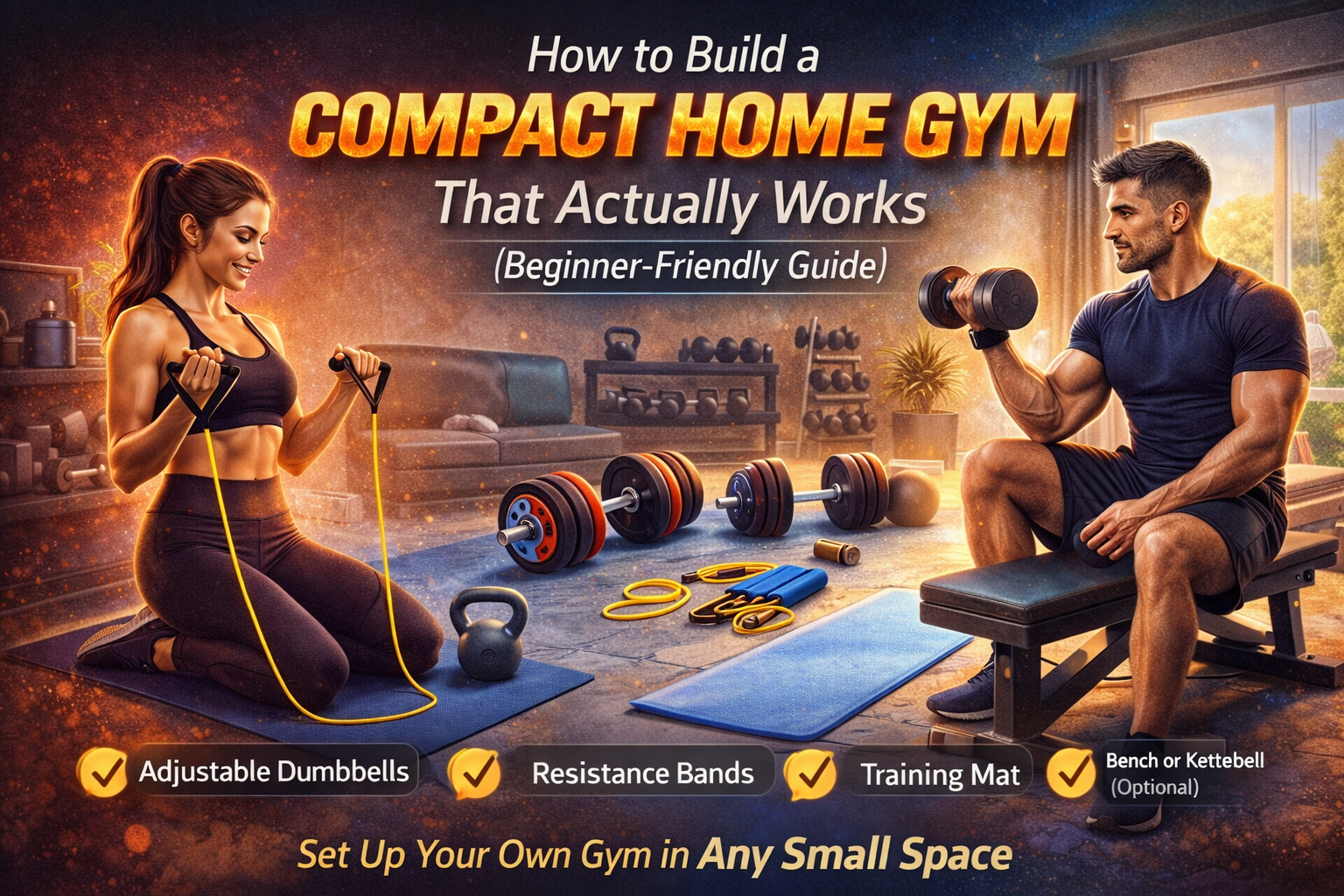
You don’t need a huge space, expensive machines, or a luxury setup to get fit at home. In fact, most people who build a home gym fail because they buy too much, not because they buy too little.
In 2026, home workouts are still growing fast, especially among people who want flexibility, privacy, and consistency. The key isn’t having more equipment. The key is having the right equipment and a setup that fits your lifestyle.
This guide will show you how to build a compact home gym that actually works, whether you’re a beginner or getting back into training. A compact home gym can fit seamlessly into your lifestyle and help you achieve your fitness goals.
Why Home Gyms Are Still a Smart Choice
Building a compact home gym allows you to train in a comfortable environment while maximizing your workout efficiency.
Having a compact home gym eliminates the hassle of traveling to a traditional gym, making fitness more accessible.
A home gym removes the biggest barriers to consistency. No travel time to the gym. No waiting for equipment. No gym anxiety or feeling judged. No excuses about the weather or traffic.
When your workout space is right there in your home, even a 20-minute session becomes possible. And consistency always beats intensity in the long run. The best home gyms are simple, practical, and easy to use every day.
Step 1: Choose Your Space (Smaller Than You Think)
You don’t need a full room dedicated to working out. A home gym can fit in a corner of your bedroom, against a living room wall, on a small balcony or in the garage, or even in a space that’s just 2 meters by 2 meters.
What matters is having enough room to move freely, a surface that’s not slippery, and good air flow. A training mat is essential here. It protects your floor, reduces noise for neighbors below, and gives you a clear workout zone that signals it’s time to train.
Step 2: The Only Equipment You Really Need
Resistance bands are an excellent addition to your compact home gym as they offer versatile workouts.
Forget the influencers with 20 different machines. For most people, this simple setup covers 90% of workouts you’ll ever want to do.
Resistance Bands
These are perfect for beginners, strength training, mobility and rehab work, and full-body workouts. They’re cheap, incredibly versatile, and easy to store in a drawer or bag. You can work every muscle group with just a set of bands.
Your compact home gym should include a training mat to provide comfort during floor exercises.
Adjustable Dumbbells
Dumbbells allow you to build muscle, progress over time as you get stronger, and train your arms, legs, back, chest, and shoulders. You don’t need heavy weights at first. Start light and gradually build up. Adjustable dumbbells save space because one set replaces multiple pairs of fixed-weight dumbbells.
Training Mat
In your compact home gym, consider adding equipment that enhances your training without taking up excessive space.
A mat is a must-have for core workouts, stretching, HIIT exercises, and yoga or mobility work. It makes workouts more comfortable and safer by cushioning your body and preventing slipping.
Optional Upgrades: Bench or Kettlebell
If you want to level up later, a workout bench adds variety to strength workouts like chest presses and step-ups. A kettlebell is amazing for combining cardio and strength in one movement. But these are optional, not mandatory for beginners.
Step 3: What to Wear for Home Workouts (This Matters More Than You Think)
A lot of people train at home in old pajamas or random clothes. That sounds comfortable, but it actually hurts your performance and motivation.
What you wear affects how well you can move, your confidence level, how your body temperature is controlled, and your mental focus. Getting dressed in actual workout clothes tells your brain it’s time to work, not time to relax.
For Women
Look for medium to high-support sports bras, especially if you’re doing HIIT or jumping movements. You also want stretchy, non-see-through leggings and breathable fabrics that wick away sweat. Support matters even at home, maybe even more so because you don’t have the accountability of being in public.
With a compact home gym, you can easily adjust your training routine to fit any space in your home.
For Men
As you build your compact home gym, prioritize equipment that can be easily stored or packed away.
Go for lightweight training tops, flexible shorts or compression leggings, and sweat-wicking fabrics. Good workout clothes make movement easier and help you stay consistent because you feel ready to train.
At tlmyshop.com, we design comfortable workout clothes that work perfectly for home training, giving you the support and flexibility you need without the gym membership.
Step 4: Beginner vs Intermediate Home Gym Setup
Beginner Setup (Simple and Affordable)
Start with resistance bands, light dumbbells, a training mat, and comfortable workout clothes. This setup is perfect for starting out, rebuilding fitness habits after a break, or just staying active and healthy.
Intermediate Setup (More Variety)
Incorporating flexibility into your compact home gym setup can lead to better workout experiences.
Once you’re consistent, you can add adjustable dumbbells, keep your resistance bands, add a bench or kettlebell, maintain your training mat, and invest in more supportive sportswear. This setup allows for serious strength training and long-term progress.
Step 5: Common Home Gym Mistakes to Avoid
Don’t buy too much equipment right away. Most of it will sit unused and make you feel guilty. Don’t choose cheap gear that breaks after a few uses. It’s frustrating and ends up costing more when you have to replace it. Don’t ignore recovery and stretching, which are just as important as the workouts themselves. Don’t train without proper support in your clothing or good footwear. And don’t set up a space that feels cramped, dark, or unpleasant to be in.
By creating a compact home gym, you can adapt your fitness space to match your personal preferences.
Your compact home gym can be equipped with innovative tools that enhance your workout effectiveness.
Your home gym should feel inviting, not overwhelming. Keep it simple and functional.
Step 6: Recovery Is Part of the Setup
A smart home gym isn’t just about training hard. It’s also about recovering well. Make sure you include stretching time after workouts, light mobility days between intense sessions, and foam rolling or massage tools to work out muscle tension.
Recovery keeps you pain-free, prevents injury, and helps you stay consistent over months and years instead of burning out in a few weeks.
Build a Home Gym You’ll Actually Use
The best home gym is not the most expensive one. It’s the one you use regularly without excuses or barriers.
Start small with just a few key pieces. Choose versatile equipment that does multiple jobs. Wear clothes that support your movement and make you feel ready to train. Focus on showing up consistently instead of chasing perfection.
When your setup fits your space and your lifestyle, training becomes easier and results follow naturally. You’re not fighting against your environment. You’re working with it.
At tlmyshop.com, we offer gym equipment and activewear designed for real people, real homes, and real training. Whether you’re just starting or upgrading your setup, you’ll find practical gear that supports your fitness journey.
Train smarter. Stay consistent. Build strength right at home.
Wishing you a happy day, every day!