
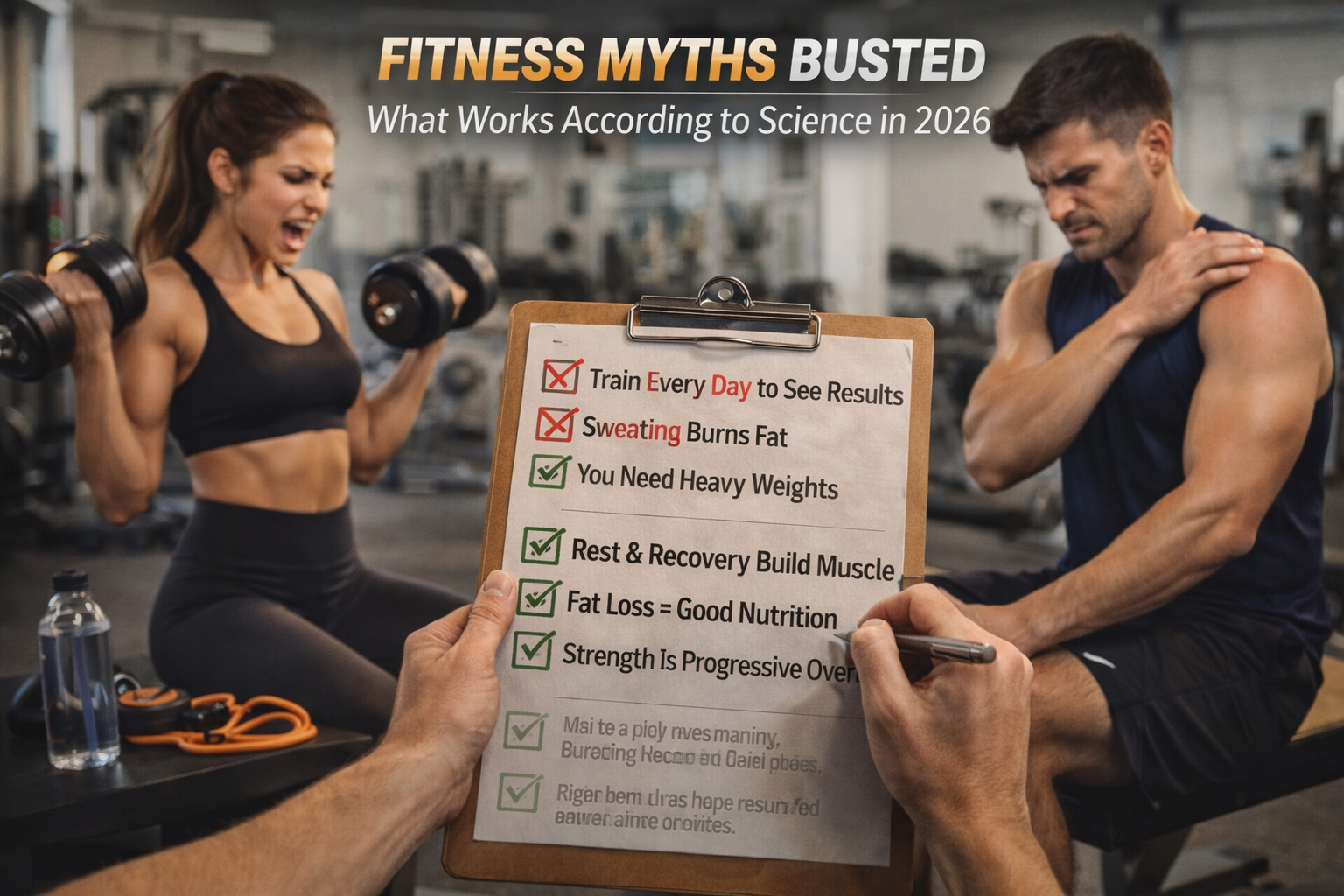
The fitness world is full of advice. Social media influencers, friends, gym trainers, and even old posters on gym walls all tell you what you should be doing. The problem? A lot of it is completely wrong.
It’s essential to understand the common fitness myths that can hinder your progress.
Identifying and debunking these fitness myths can lead to more effective training methods.
Understanding the science behind these fitness myths helps clarify what actually works.
In 2026, we know more about training, recovery, and health than ever before. Science has helped us separate facts from fiction. Yet many people are still stuck following outdated myths that actually slow their progress and waste their time.
Don’t let these fitness myths misguide your journey to better health.
One of the biggest fitness myths is that you must push through pain to see results.
Don’t fall for the fitness myths that suggest more workouts equal faster gains.
Recognizing these fitness myths can significantly enhance your workout efficiency.
These fitness myths often lead to misconceptions about how our bodies work.
Understanding the facts can help dispel these fitness myths and improve your routine.
Don’t let fitness myths dictate your exercise choices; focus on effective strategies.
Let’s bust the biggest fitness myths and show you what actually works based on real science and experience.
Many of these fitness myths can demotivate and mislead beginners.
One of the most pervasive fitness myths is that only heavy weights build muscle.
These fitness myths can often lead to injury and frustration among gym-goers.
Myth 1: You Must Train Every Day to See Results
Many believe that cardio is the sole answer, but that’s one of the biggest fitness myths.
A balanced approach is key, as relying solely on cardio is one of the fitness myths.
Fitness myths like ‘no pain, no gain’ can lead to harmful training practices.
Choosing the right workout gear can also combat fitness myths that suggest otherwise.
Don’t let outdated fitness myths limit your potential for success.
Many people believe that if they skip even one day, they’re falling behind. So they train nonstop, even when they’re exhausted or sore, thinking more is always better.
The truth: Muscles don’t grow during your workout. They grow when you rest. Overtraining increases your risk of injury, slows down recovery, and eventually kills your motivation completely.
What works: Three to five quality workouts per week, at least one or two full rest days, good sleep every night, and regular stretching or mobility work. Consistency over time matters way more than how many days you train each week.
Recognizing that fitness myths don’t define your personal journey is crucial.
Myth 2: Sweating More Means You’re Burning More Fat
When facing fitness myths, it’s important to stay informed and educated.
Understanding these fitness myths can lead to a healthier relationship with exercise.
Challenging fitness myths helps you craft a more effective fitness strategy.
Some people think the more they sweat, the more fat they’re losing. That’s why they wear extra layers to the gym or train in super hot rooms on purpose.
The truth: Sweat is just your body’s way of cooling itself down. It has absolutely nothing to do with fat loss. When you sweat heavily, you’re mostly losing water, not fat. You’ll gain that water weight right back when you drink something.
Don’t let these fitness myths cloud your judgment about what works.
What works: Training at the proper intensity for your goals, balancing strength training with cardio, eating a healthy diet, and staying hydrated. Fat loss depends on burning more calories than you consume over time, not on how much you sweat.
Myth 3: You Need Heavy Weights to Get Strong
Many beginners avoid the gym completely because they think they need to lift huge weights to make any progress at all.
The truth: You can absolutely build strength with light weights, resistance bands, and bodyweight exercises, especially when you’re starting out. What matters is challenging your muscles progressively over time.
What works: Progressive overload, which means gradually increasing the difficulty of your workouts, using good technique and form, and training consistently. Strength comes from smart progression, not from ego lifting weights that are too heavy for you.
Myth 4: Cardio Is the Best Way to Lose Weight
Running, cycling, and high-intensity workouts are great for your health. But cardio alone is not the magic solution for weight loss that many people think it is.
The truth: Cardio burns calories during your workout, but strength training builds muscle. And more muscle means your body burns more calories even when you’re resting. Your metabolism stays higher throughout the day.
What works: Combining strength training with cardio, moving your body daily in any way you can, and eating a balanced diet. The best results come from doing both types of exercise, not just one.
Myth 5: Workout Clothes Don’t Matter
Many people train in old t-shirts, loose shorts, or uncomfortable clothes and genuinely think it doesn’t matter what they wear.
The truth: What you wear directly affects how well you can move, how comfortable you feel, how your body controls temperature, and how confident you are during training. Bad clothes create constant distractions.
What works: Wearing breathable fabrics that let air flow, supportive sports bras that actually hold everything in place, flexible shorts or leggings that move with you, and sweat-wicking materials that pull moisture away from your skin. Good gear helps you focus on training instead of constantly adjusting your clothes.
Myth 6: No Pain, No Gain
This is honestly one of the most dangerous myths in all of fitness. People think soreness and pain automatically mean they’re making progress.
The truth: Pain often means poor recovery, bad form and technique, or overtraining your body. Soreness is not the same as progress. You can make excellent gains without being in pain all the time.
What works: Training with good form and technique, listening to your body’s signals, doing proper warm-ups before intense exercise, and taking real recovery days. Progress should feel challenging and hard, but not damaging or painful.
Myth 7: Supplements Are Necessary for Results
Protein powders, fat burners, pre-workout drinks. Many people think these supplements are required to see any results at all.
Finally, remember that staying informed helps combat common fitness myths effectively.
The truth: Most of your results come from regular food, quality sleep, consistent training, and staying with it over time. Supplements might help a little, but they’re optional additions, not essential foundations.
What works: Eating balanced meals with enough protein, drinking plenty of water throughout the day, getting good rest and recovery, and building solid habits first. You can add supplements later if you want, but they’re not necessary to start or to succeed.
Myth 8: Home Workouts Aren’t Effective
Some people genuinely believe that real results only happen in big commercial gyms with lots of machines.
The truth: You can absolutely build muscle, lose fat, and stay fit at home with the right simple setup. Location doesn’t determine results. Effort and consistency do.
What works: Using resistance bands, a set of dumbbells, a training mat, and bodyweight exercises like push-ups and squats. Consistency matters infinitely more than where you train.
Myth 9: You’re Too Old or Too Late to Start
Many adults think it’s too late to get fit, especially if they haven’t exercised in years or decades.
The truth: People improve their strength, mobility, and overall health at any age. Your body responds to training whether you’re 25, 45, or 65. It’s never too late.
What works: Starting slow and not rushing, building small sustainable habits, being patient with yourself, and training smart instead of just hard. The best time to start was yesterday. The second best time is right now today.
Myth 10: More Workouts Equal Faster Results
Some people try to speed up their progress by doing double workouts every day, adding extra cardio sessions, and never taking rest days.
The truth: More is not automatically better. Better is better. Quality beats quantity every single time in fitness.
What works: Doing quality training sessions with focus and effort, taking proper recovery time between workouts, and maintaining long-term consistency over months and years. Fitness is a marathon, not a sprint race.
What Science and Experience Agree On in 2026
After years of research and millions of real-world results, the basics still win every time. Train regularly without overdoing it. Rest properly and take recovery seriously. Eat well with balanced nutrition. Wear comfortable gear that supports your movement. Stay consistent week after week. Be patient with the process.
There are no magical shortcuts. But there are smart, proven ways to train that work for real people.
Train Smarter, Not Harder
Most people fail at fitness not because they’re lazy or lack willpower. They fail because they follow bad advice and outdated myths.
When you stop believing myths and start following what actually works based on science, everything becomes easier. You feel less frustrated. You see better progress. You get fewer injuries. Your motivation stays higher.
At tlmyshop.com, we support real training with practical gym equipment and comfortable activewear designed for everyday athletes who want to get results.
No hype. No fake promises. Just quality tools that help you train better and stay consistent.
Bust the myths. Trust the process. Stay consistent.