
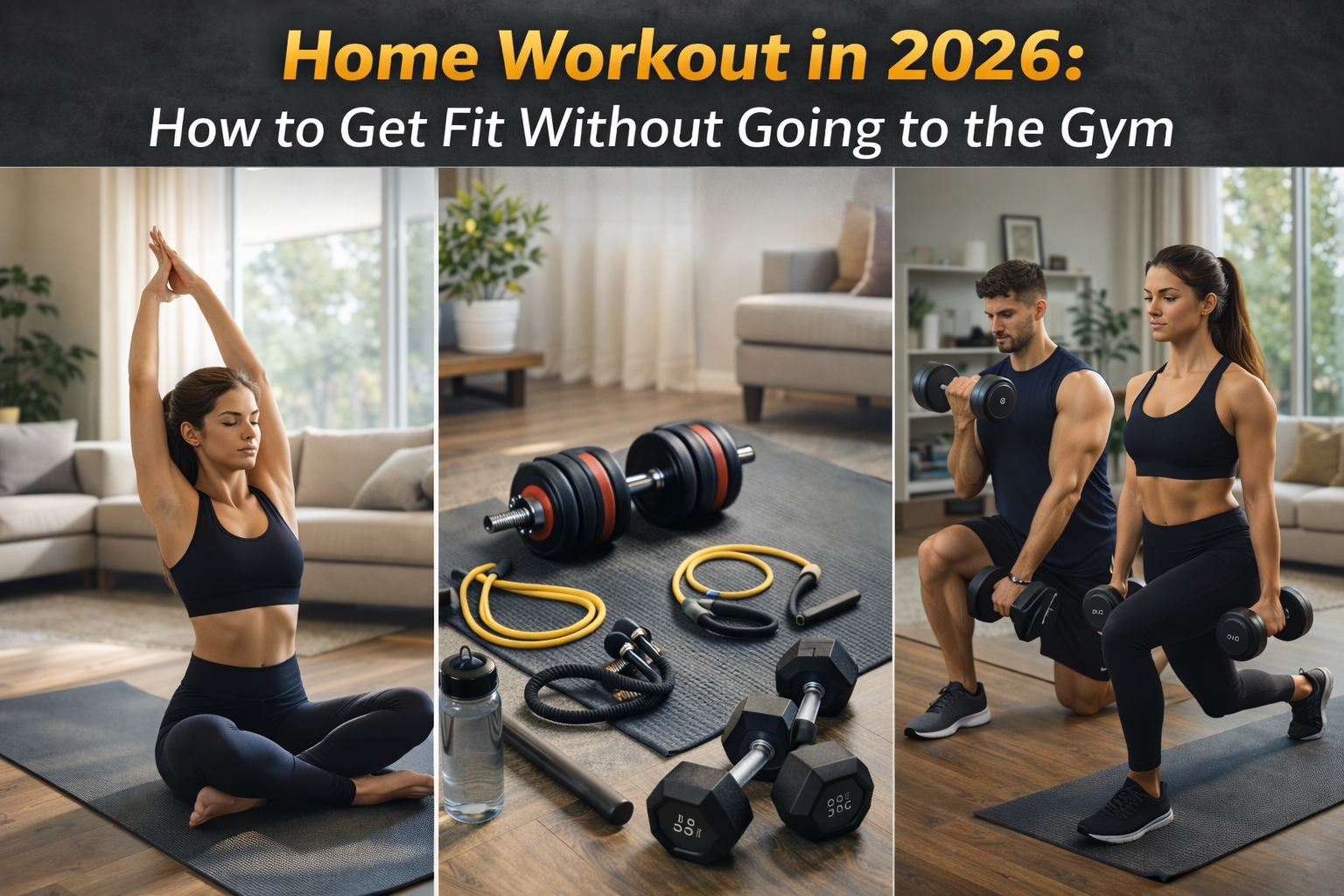
Not everyone loves crowded gyms, expensive memberships, or waiting in line for machines. The good news? In 2026, you absolutely don’t need a gym to get fit.
Incorporating regular Home Workout routines can drastically improve your health.
Making a commitment to your Home Workout can lead to significant fitness gains.
This Home Workout guide will help you maximize your results.
With the right mindset, some basic equipment, and comfortable workout clothes, you can build strength, lose fat, and improve your overall health right from your own home.
The Home Workout trend is rapidly gaining traction among fitness enthusiasts.
A Home Workout can be just as effective as traditional gym training.
Consider what equipment you need for your Home Workout setup.
Your Home Workout space should be motivating and free from distractions.
This guide shows you exactly how to start home training the smart way, without wasting money on things you don’t actually need.
Why Home Workouts Are More Popular Than Ever
Choosing the right attire can enhance your Home Workout experience.
More people are choosing home fitness because it genuinely fits better into real life. You save time because there’s no commuting back and forth. You save money on monthly gym fees. You can train whenever your schedule allows, not just when the gym is open. You feel more comfortable working out in your own space without feeling self-conscious. And most importantly, you tend to stay more consistent because the barrier to starting is so much lower.
Consistency beats perfection every single time. And home workouts make consistency easier because your gym is literally just a few steps away.
Step 1: Create Your Home Workout Space
You don’t need a full dedicated gym room with mirrors and fancy flooring. All you actually need is a small open space, maybe 2 meters by 2 meters at most. Good natural or artificial lighting so you can see what you’re doing. Fresh air from a window or good ventilation. And a clean floor that’s not slippery.
A corner of your bedroom or living room works perfectly fine. You don’t need to renovate or buy special flooring.
Here’s a tip that really helps: keep your workout gear visible. When you see your dumbbells or resistance bands sitting there, you’re way more likely to actually use them instead of forgetting they exist.
Investing in a few essentials will help you with your Home Workout journey.
Step 2: Wear the Right Workout Clothes
Your clothes directly affect how well you can move and how confident you feel during your workout. Good activewear helps you move freely without restriction, stay cool by pulling sweat away from your body, avoid constant distractions from adjusting things, and genuinely feel motivated to start.
Resistance bands are perfect for a versatile Home Workout.
For Women
Consider adding variety to your Home Workout with optional equipment.
Choose a supportive sports bra that matches your activity level, stretchy leggings that move with you, and a breathable top that doesn’t cling when you sweat.
This Home Workout plan is suitable for beginners looking to start.
For Men
Choose a lightweight shirt that dries quickly, flexible shorts or compression leggings that allow full range of motion, and sweat-wicking fabric that keeps you comfortable.
When you feel good in your outfit, you genuinely train better. It’s that simple. Don’t underestimate how much your clothes affect your workout quality.
Step 3: Basic Equipment You Actually Need
You don’t need expensive machines taking up half your living room. Start with just these essentials.
Must-Have Equipment
Resistance bands are incredibly versatile and cheap. A set of dumbbells, even just one or two pairs to start. And a workout mat to protect your floor and cushion your body during floor exercises.
These three items cover about 90% of exercises you’ll ever want to do at home.
Both gym and Home Workout options have their advantages.
Optional Equipment for Later
Your Home Workout allows for flexibility in your routine.
Once you’re consistent and want more variety, you can add a kettlebell for dynamic movements, a jump rope for cardio, or a foam roller for recovery. But don’t rush to buy everything at once. Start small and upgrade later when you actually need it.
Many find that a mix of gym and Home Workout leads to the best results.
Step 4: Simple Home Workout Plan for Beginners
Understanding common Home Workout mistakes can enhance your training.
Don’t skip your Home Workout warm-ups to avoid injuries.
Try this straightforward three-day plan that covers everything you need.
Day 1: Full Body Strength
Recovery is crucial after any Home Workout session.
Do squats for 3 sets of 10 reps. Push-ups or modified push-ups for 3 sets of 8 reps. Dumbbell rows for 3 sets of 10 reps. And finish with plank holds for 3 sets of 20 seconds each.
Day 2: Cardio and Core
Sticking to a consistent Home Workout routine will yield results.
Start with 20 minutes of walking outside or jumping rope indoors. Then do crunches for 3 sets of 12 reps, leg raises for 3 sets of 10 reps, and finish with stretching.
Day 3: Strength and Mobility
Do lunges for 3 sets of 10 reps per leg. Glute bridges for 3 sets of 12 reps. Resistance band rows for 3 sets of 12 reps. And finish with yoga or stretching.
Maintain motivation for your Home Workout through good habits.
Make sure to rest at least one full day between workouts. Your body needs that recovery time to actually get stronger.
Step 5: Gym vs Home – Which Is Better?
Home Workout routines are accessible for everyone.
Both genuinely work. The best choice is whatever fits your personality and lifestyle better.
Gyms give you access to more machines and equipment variety. They provide a social atmosphere that some people find motivating. But they require travel time and often have peak hours when it’s crowded.
Home training gives you complete privacy if you’re self-conscious. You have total flexibility to train whenever suits your schedule. And there’s zero travel time wasted. But you have less equipment variety unless you invest heavily.
Many people in 2026 mix both options, and that works great too. Maybe you go to the gym for heavy leg days but do everything else at home. What actually matters is showing up consistently, not where you physically are.
Step 6: Common Home Workout Mistakes to Avoid
Most people who quit home training make these mistakes. Don’t be one of them.
Don’t train too hard too fast and burn yourself out in the first week. Don’t skip warm-ups just because you’re at home. Don’t wear uncomfortable clothes that restrict your movement or constantly need adjusting. Don’t skip rest days thinking more is always better. And don’t quit too early before you’ve given your body time to adapt and show results.
Progress takes time. Be genuinely patient with yourself and the process.
Step 7: Recovery Is Part of Training
Your muscles don’t actually grow during your workout. They grow when you rest and recover afterward. Make sure you’re sleeping seven to nine hours every night. Drink enough water throughout the day, not just during workouts. Stretch regularly, especially after training. And take full rest days at least once or twice per week.
No recovery means no results, no matter how hard you train.
Step 8: Build a Routine That Lasts
You don’t need to rely on motivation every single day. What you need is a simple system that makes starting easy.
Train on the same days each week so it becomes automatic and you don’t have to decide. Prepare your workout clothes the night before so there’s no decision to make in the morning. Keep all your equipment in one specific spot so you don’t waste time hunting for things. And plan for 30 to 45 minute sessions, not exhausting two-hour marathons.
Make it as easy as possible to start your workout. Remove friction and excuses.
Step 9: Stay Motivated Long-Term
Here’s the truth about motivation: it comes and goes like the weather. You can’t control it. But habits stay consistent regardless of how you feel.
Some days will feel really hard. You won’t want to work out. That’s completely normal and happens to everyone. The key is not quitting when it gets difficult. Adjust your plan if you need to, but keep showing up.
Small steps every single week add up to big results over months and years. Trust the process even when progress feels slow.
Final Thoughts: You Don’t Need a Gym to Be Fit
In 2026, fitness is about building smart habits, not about having access to fancy gym buildings or expensive equipment.
You need some basic equipment like bands and dumbbells. Comfortable clothes that support your movement. A simple workout plan you can actually follow. Patience with yourself. And consistency over time.
That’s honestly all it takes.
At tlmyshop.com, we support home athletes and beginners with practical activewear and gym equipment made for real life and real training.
Whether you train in your bedroom, living room, or on your balcony, your fitness journey matters and deserves quality gear.
Start today. Stay consistent. Trust yourself.
A really good blog and me back again.