
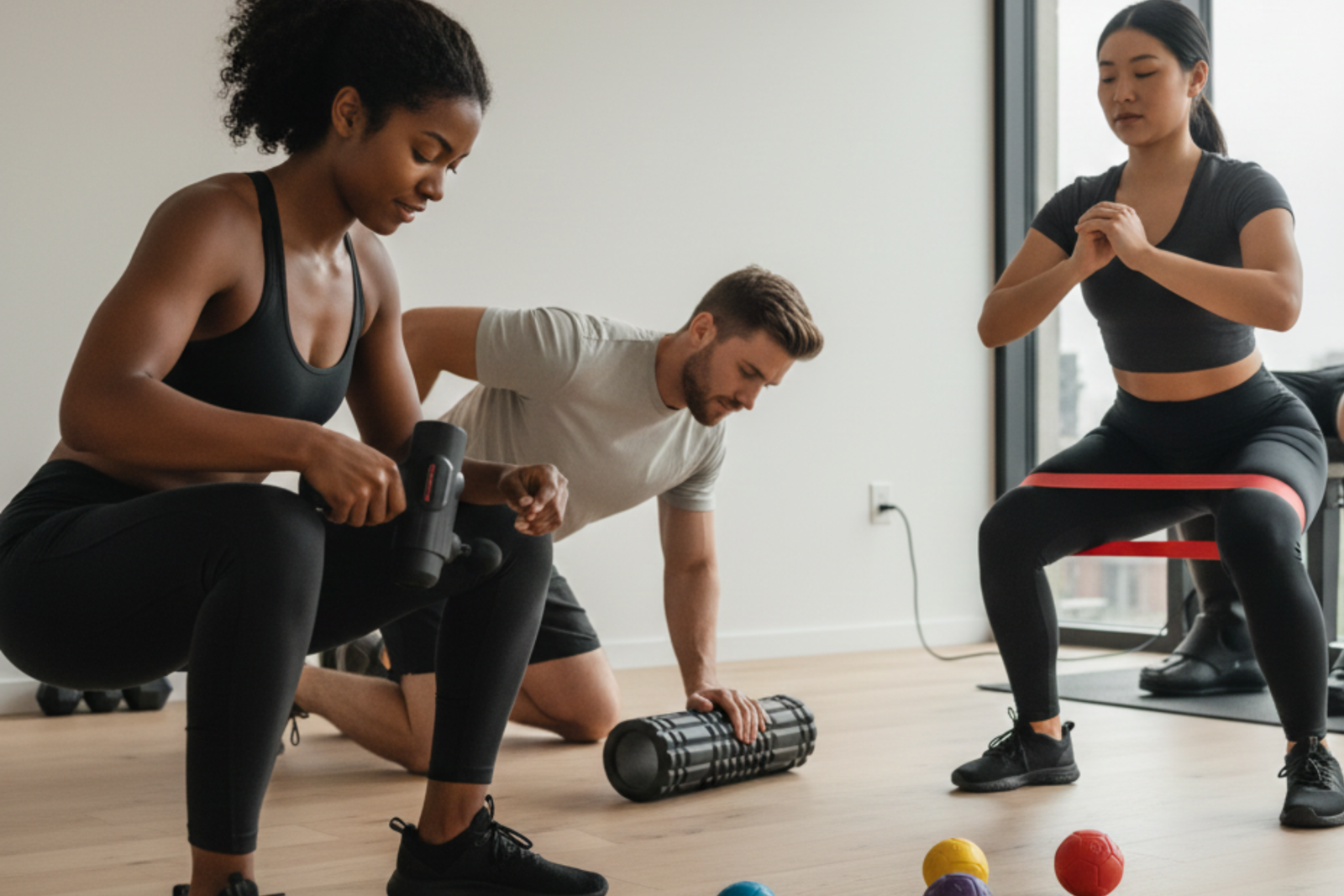
The Problem with Old-School Warm-Ups
For years, we all did the same thing before working out: 10 minutes on the treadmill and a few quick stretches. Recovery? That was something you worried about later, if at all. Today, we recognize the importance of incorporating effective Recovery Tools into our routine. These Recovery Tools are essential for enhancing your performance.
But here’s the truth—that approach is outdated and it’s holding you back.
The smartest athletes and trainers today know that if you want to train harder, lift heavier, and avoid those annoying injuries that derail your progress, you need to rethink everything. Recovery isn’t just what happens after your workout. It starts before you even begin.
Understanding the right Recovery Tools can significantly enhance your performance and well-being.
Integrating these Recovery Tools into your regimen can dramatically improve your overall fitness results.
We’re talking about two concepts: Pre-covery (preparing your body before training) and Active Recovery (helping your body bounce back faster after). These aren’t just buzzwords, they’re game-changers.
Below are the 5 essential recovery tools that are replacing the old warm-up routine and helping people recover faster than ever. These aren’t just trendy gadgets. They’re necessities for anyone serious about their fitness.
From massage guns to foam rollers, these Recovery Tools are indispensable in modern fitness.
Using Recovery Tools like massage guns helps in muscle recovery and enhances overall athletic performance.
1. The Massage Gun: Instant Deep Tissue Relief
Massage guns have exploded in popularity, and it’s not hard to see why. They’ve gone from professional locker rooms to everyone’s gym bag because they work incredibly well for both warming up and recovering.
Why It Actually Works
Massage guns use something called percussive therapy, basically rapid bursts of pressure that go deep into your muscle tissue. Here’s what makes them so effective:
Waking Up Your Muscles: Use it for just 30 seconds on the muscle you’re about to train (like your quads before squats) and you’ll increase blood flow and get those muscles firing properly.
Breaking Up Knots: It hits those stubborn, hard-to-reach tight spots in places like your hip flexors or upper back way better than your hands ever could.
Foam rollers are one of the most popular Recovery Tools, essential for mobility and flexibility.
Reducing Soreness: After a workout, it helps flush out the waste products your muscles produce, which means less of that brutal next-day soreness (DOMS).
Quick Tip: Don’t just use it on sore spots after your workout. Try it before training too-30 to 60 seconds on low speed on whatever muscle group you’re about to work.
2. The Foam Roller: The Original Mobility Tool
Foam rollers have been around forever, and they’re still one of the best tools for mobility work. There’s a reason they haven’t gone anywhere.
Why It Actually Works
Foam rolling is all about self-myofascial release (SMR). That’s just a fancy way of saying you’re working on the connective tissue (fascia) that wraps around your muscles. When that tissue gets tight, it restricts your movement.
Better Range of Motion: Rolling helps smooth out and lengthen that fascia, which immediately improves your flexibility and how well your muscles can move.
Injury Prevention: By keeping your joints and muscles moving freely before you load them with weight, you’re way less likely to get hurt.
Quick Tip: Don’t rush through it. Roll slowly about an inch per second. When you hit a tight or painful spot, pause there for 30 seconds and take some deep breaths.
3. Resistance Bands: The Smart Way to Warm Up
Resistance bands, especially those mini loop bands, are hands-down the best way to get a quality warm-up without exhausting yourself before the real workout begins.
Why They Actually Work
Bands give you what’s called “accommodating resistance,” which means the tension increases as you stretch them. This forces all those smaller stabilizing muscles (like your rotator cuffs and glutes) to activate right away.
Compression gear is another of the key Recovery Tools that athletes rely on.
These Recovery Tools help in reducing inflammation and speeding up recovery times.
Mind-Muscle Connection: Bands help you really feel the muscle working before you start lifting heavy. This is huge for preventing injury and keeping your form clean.
Dynamic Movement: Unlike static stretching, bands let you do functional movements (like side steps or band pull-aparts) that raise your body temperature safely and effectively.
Quick Tip: Before leg day, put a mini loop band around your knees and do some glute bridges and side walks. You’ll feel your glutes wake up instantly, and your main lifts will feel so much better.
4. Compression Gear: Speed Up Your Recovery
Compression technology has come a long way. We’re not just talking about basic socks anymore—these advanced recovery garments are now essential for reducing inflammation and getting you ready for your next workout faster.
Using massage balls is another effective way to target specific muscle groups with Recovery Tools.
Why It Actually Works
Compression gear (like sleeves, socks, or tights) applies graduated pressure to your limbs. This pressure helps push deoxygenated blood and waste products back toward your heart more efficiently.
Less Swelling: It reduces post-workout inflammation and swelling, especially in your legs and arms.
Faster Recovery: By flushing out waste products like lactic acid faster, compression significantly cuts down on how sore you feel the next day.
Quick Tip: Put on compression socks or tights right after an intense leg day or long run, and keep them on for a few hours. You’ll notice a huge difference in how you feel the next morning.
5. Massage Balls: For Those Stubborn Knots
Incorporate these Recovery Tools into your workout routine for faster recovery.
Your approach to fitness should include these Recovery Tools for optimal performance.
Discover the benefits of using these Recovery Tools consistently for better results.
The right Recovery Tools can change the way you train and recover.
Shop for the best Recovery Tools to enhance your fitness journey.
Sometimes a foam roller is just too big and broad to really get at a specific problem area. That’s where small, dense tools like lacrosse balls or spikey massage balls come in.
Why They Actually Work
These small balls let you apply intense, focused pressure to tiny areas that a foam roller can’t reach effectively.
Deep Trigger Point Work: They work like a physical therapist’s thumb, breaking up deep tension in spots like the bottom of your feet (plantar fascia), your piriformis, or the muscles around your shoulder blades.
Take Them Anywhere: They’re small and portable, so you can use them at work, while traveling, or anywhere you need quick relief.
Quick Tip: Place the ball directly under a tight spot, lean your weight into it (against a wall or on the floor), and hold for 60 seconds. You’ll feel the tension start to release.
The Bottom Line
The way we approach fitness has evolved. Your warm-up and cool-down aren’t optional extras—they’re the foundation of long-term progress.
By using these 5 tools consistently, you’re not just preventing injury. You’re investing in staying consistent, getting stronger, and training smarter for years to come.
Ready to upgrade your recovery routine?
🔥 Shop the tlmyshop Recovery Collection
Get all 5 must-have tools and start training smarter today.